


A battery for heat.
Most batteries store electricity. Ours stores heat: the heat heavy industry already makes and throws away. Here is how it works, in plain language first and in engineering terms if you want them.
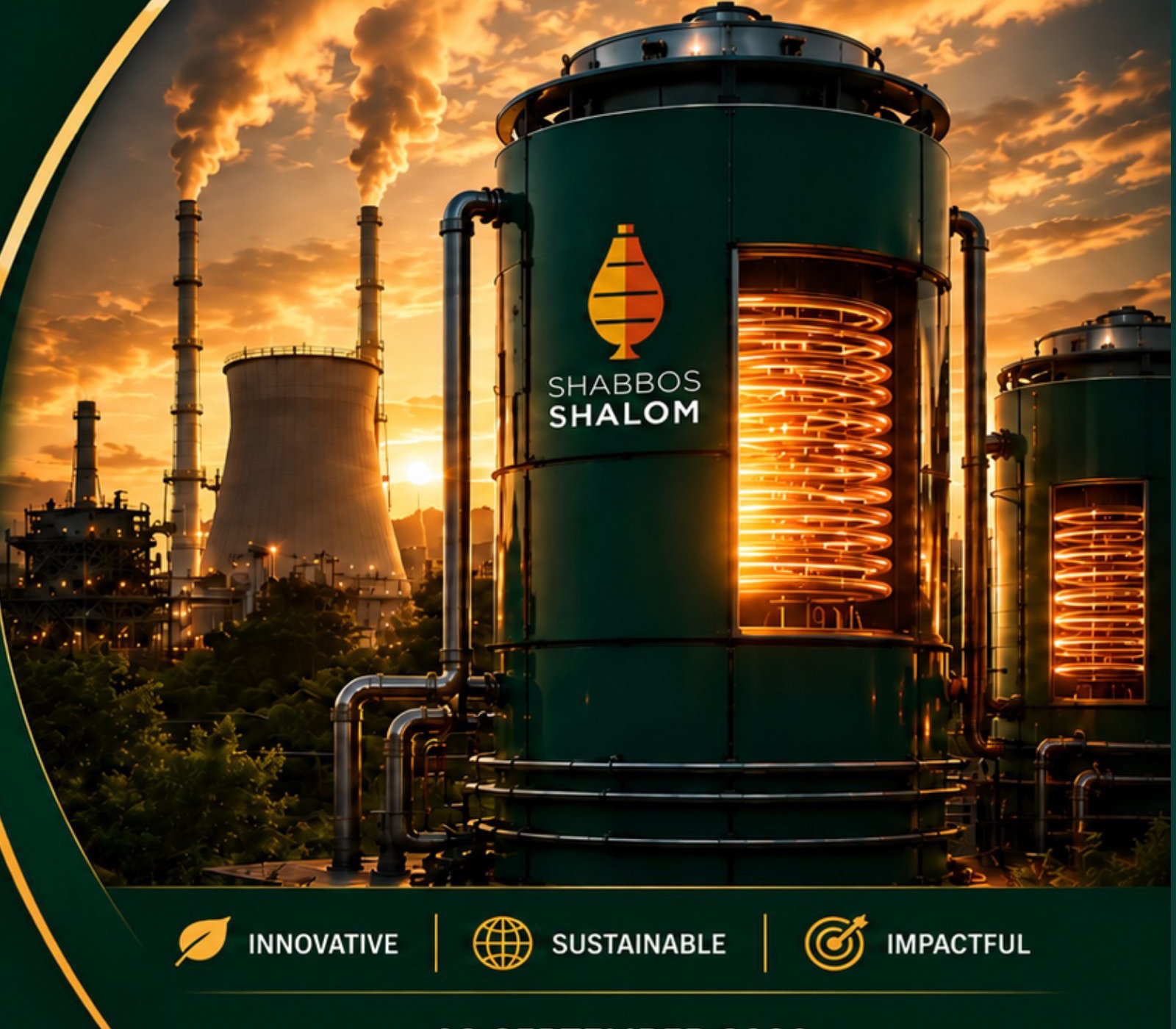
If you understand a flask of tea, you understand this.
No engineering degree needed. These three ideas are the whole of it.
A flask the size of a tank
A flask keeps tea hot for hours because it holds heat in. A thermal battery is an industrial-scale, very well insulated flask that is filled with heat instead of tea.
Melting stores a lot of heat
Ice keeps a cooler box cold for a long time because melting soaks up energy. Our phase change material works the other way round: it melts as it takes in heat and gives it back as it sets.
Heat when it's needed
A home solar battery keeps daytime sun for the evening. Ours keeps a plant's spare heat for its busiest hours: at start-up, at peak, or when energy costs most.
Four steps, one closed loop.
Tap a step to see what happens there. Switch between a simple explanation and the technical one.
Watch the battery fill and give back.
Pick a site and drag through the day. When the plant has spare heat, the battery charges. When demand peaks, it releases.
Choose a site
An illustrative model to explain the idea, not site data. A real design starts with a survey of your plant.
Even the battery is made from what industry leaves behind.
We use industrial by-products in building our thermal battery. Materials that would otherwise sit in a stockpile or a landfill become part of the system that saves energy, so the battery starts with a lower carbon footprint before it stores its first unit of heat.
We're at TRL 4. Here's what that means.
Engineers grade new technology from 1 (an idea) to 9 (proven in daily use). Our refined prototype has been validated in the lab. Tap any level to read it.
In the CSIR's mentorship programme
We are part of the Council for Scientific and Industrial Research's mentorship programme, refining our technology with South Africa's national research council on the road to a site pilot.
Purpose-built for mines and heavy industry.
Most energy storage is designed for solar and wind farms and the grid. Ours starts where the heat is.
Most competitors
Renewable plants + storage grids
- StoresElectricity, in chemical battery cells
- Charged bySolar panels, wind turbines and the grid
- LivesOn renewable farms and grid sites
- Built fromNewly mined and processed materials
- Leaves behindIndustry's waste heat, still lost
Shabbos Shalom
Mines + heavy industries
- StoresHeat, in a phase change material
- Charged byWaste heat the plant already makes
- LivesAt the plant, beside the process
- Built fromIndustrial by-products, lowering its own carbon footprint
- Gives backFuel savings, lower emissions and cleaner air
Want to see it on your site? Host a pilot with us.
We are looking for mines and heavy-industry partners for our next stage of testing.